
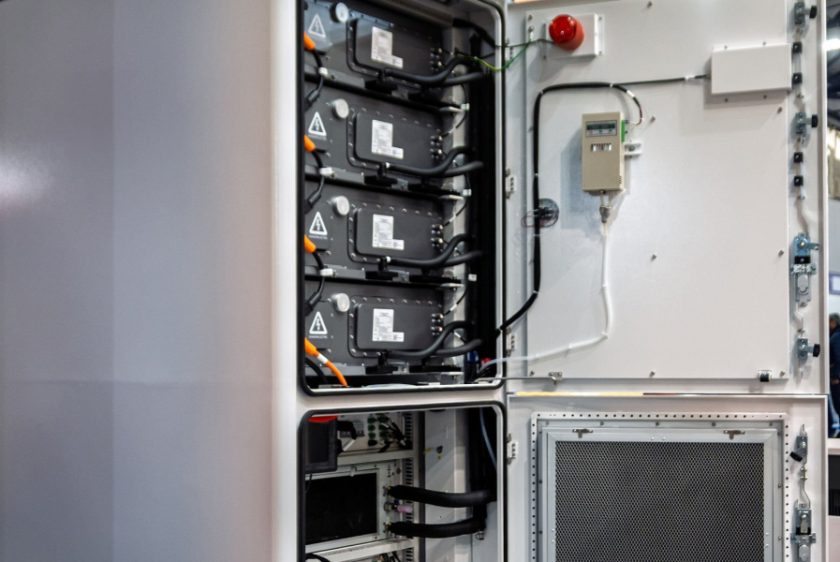
An air-cooled energy storage cabinet is one of the two dominant thermal management solutions for modern battery energy storage systems, alongside its liquid-cooled counterpart, each with unique performance characteristics and suitable application scenarios. Choosing the right cooling structure directly determines the operating efficiency, service life and long-term economic return of the entire energy storage project.
Understanding Air-Cooled Energy Storage Cabinets
An air-cooled energy storage cabinet is one of the most widely deployed energy storage equipment types, dissipating heat through either natural convection or forced air circulation via built-in fans. This straightforward design brings inherent advantages in installation and daily maintenance.
The structure of an air-cooled system is relatively simple, with no complex piping networks or liquid circulation loops required. This streamlined design translates to lower upfront installation costs and reduced ongoing maintenance expenses. Most air-cooled energy storage cabinet models deliver strong operational flexibility across a wide range of environments, adapting well to variable climate conditions and different installation sites.
These systems also feature proven durability. Core cooling components such as cooling fans and heat sinks are standardized, widely available and easy to replace, allowing the equipment to operate reliably even at moderately elevated ambient temperatures. For small to medium-scale energy storage projects with average power density, an air-cooled energy storage cabinet offers a cost-effective, low-fuss thermal management option.
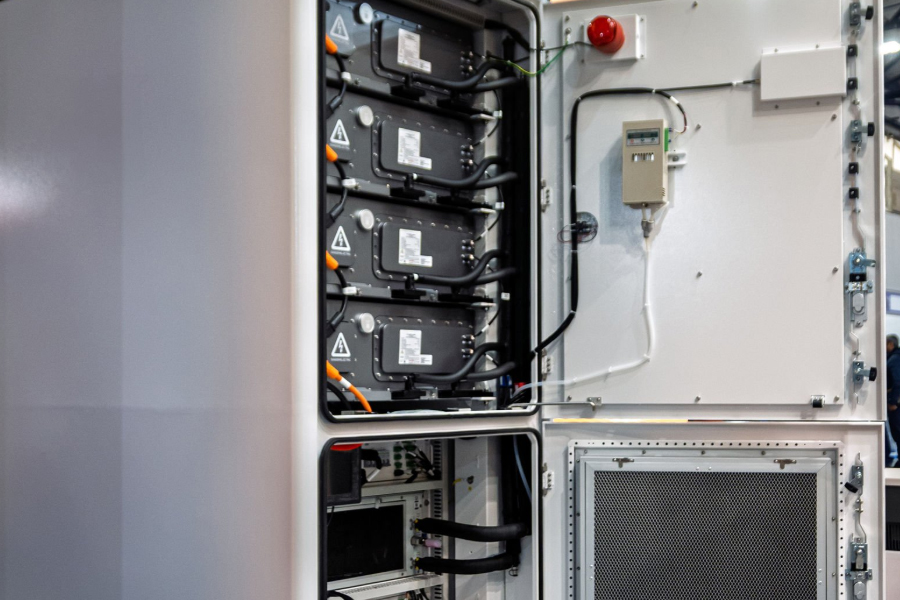
Despite its maintenance advantages, an air-cooled energy storage cabinet has clear performance limitations. Its cooling efficiency is directly influenced by ambient temperature and site ventilation conditions. In high-density, high-load operating scenarios, air-cooled technology generally cannot match the thermal control performance of liquid-cooled alternatives. For facilities requiring continuous, heavy-duty operation, a thorough comparative analysis is necessary to ensure long-term equipment stability.
Core Advantages of Liquid-Cooled Energy Storage Cabinets
The primary advantage of liquid-cooled storage cabinets lies in their highly efficient heat dissipation capability, which stems from the fundamental working principle of liquid cooling systems. Liquid-cooled systems transfer and remove heat through circulating coolant, and liquid media absorb and conduct heat far more effectively than air.
This superior heat transfer capability allows energy storage equipment to maintain a stable, consistent operating temperature even under continuous high-load conditions. The technology performs particularly well in high battery density applications, delivering outstanding thermal performance in electric vehicle charging stations and large-scale utility energy storage stations where heat generation is concentrated.
Liquid cooling technology is also widely adopted across data centers, solar photovoltaic power plants and wind power facilities, all of which face substantial heat dissipation demands. By maintaining precise temperature control across battery modules, liquid-cooled storage cabinets improve energy conversion efficiency and deliver stable, reliable power supply for various industries.
Notably, liquid-cooled storage cabinets also offer significant energy-saving benefits. Liquid coolant has a much higher specific heat capacity than air, meaning it achieves the same cooling effect with lower power consumption for circulation systems. This reduces long-term operating costs and lowers the overall environmental footprint of the energy storage system. In an industry trending toward both high efficiency and environmental sustainability, liquid-cooled storage cabinets represent a high-performance option worth prioritizing for demanding applications.
Beyond cooling performance, liquid cooling delivers more uniform temperature distribution across battery modules. Reduced temperature variation between cells minimizes thermal stress, which directly extends battery cycle life and reduces long-term replacement costs for system owners.
Head-to-Head Performance Comparison
When comparing the practical performance of air-cooled and liquid-cooled storage cabinets, evaluation should cover four core dimensions to match solutions with project requirements.
First, cooling efficiency and power density compatibility. An air-cooled energy storage cabinet dissipates heat via air flow, with a simple structure suited for moderate temperature environments. Its cooling performance plateaus as power demand increases, making it less effective for ultra-high-density deployment. Liquid-cooled systems, by contrast, manage heat far more effectively, maintaining stable system temperatures even in high ambient conditions and supporting much higher battery packing densities.
Second, maintenance complexity and operational convenience. An air-cooled energy storage cabinet is far simpler to maintain, typically requiring only regular filter cleaning and occasional fan replacement. Liquid-cooled systems require periodic inspection of coolant levels, pipe connections and pump condition, demanding more specialized maintenance expertise.
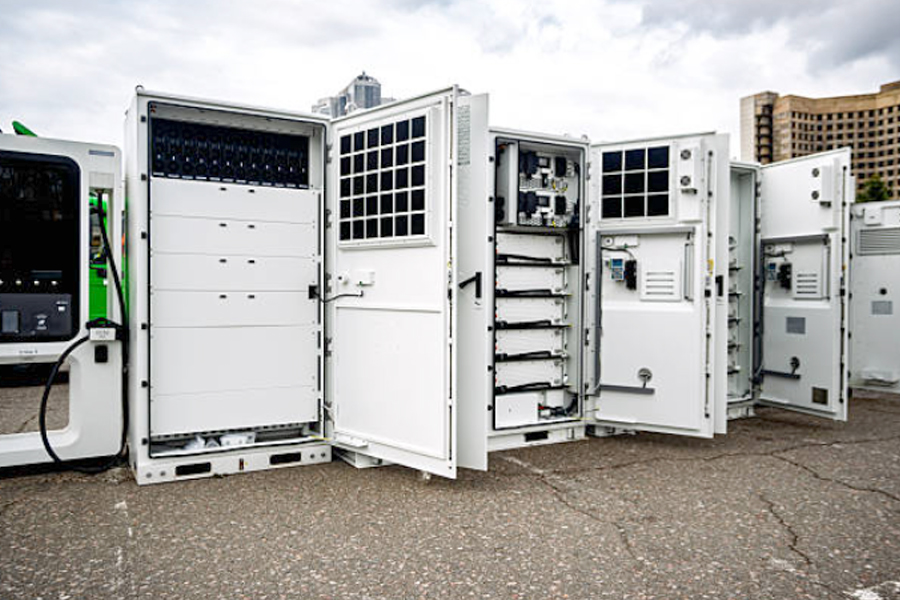
Third, energy consumption during operation. Optimized liquid circulation enables highly efficient heat exchange, giving liquid-cooled systems better energy efficiency per unit of cooling capacity in high-load scenarios. The air-cooled energy storage cabinet has lower auxiliary power consumption at light loads, but fan power draw rises sharply as cooling demand increases.
Fourth, environmental adaptability. Liquid-cooled cabinets have a clear advantage in space-constrained sites or applications with strict thermal control requirements. An air-cooled energy storage cabinet remains a strong choice for projects with good site ventilation, adequate space and more limited budgets.
Key Factors for Selecting the Right Cooling Solution
Selecting the optimal storage cabinet cooling solution requires evaluation across multiple factors to balance performance, cost and long-term reliability for specific application scenarios.
First and foremost is matching cooling technology to actual thermal requirements. For deployments that do not require high-density battery packing, the air-cooled energy storage cabinet is usually the preferred choice due to its simple structure and low maintenance costs. For high-density battery configurations or high-power continuous operation, liquid-cooled storage cabinets deliver superior thermal management performance and overall energy efficiency.
Second is the operating environment of the installation site. If the site experiences large temperature fluctuations or sustained high ambient temperatures, a liquid-cooled system provides more stable thermal control and keeps batteries operating within their optimal temperature range. In locations with relatively stable, mild and dry ambient conditions, an air-cooled energy storage cabinet is usually fully capable of meeting cooling requirements.
Third is balancing upfront capital expenditure with long-term operating costs. While liquid-cooled storage cabinets require higher initial investment, their energy savings, lower battery degradation and reduced maintenance frequency can deliver significant returns over the full system lifecycle. Project planners should conduct a full total cost of ownership analysis rather than focusing only on upfront hardware costs.
Fourth is matching on-site operational and maintenance capabilities. The air-cooled energy storage cabinet places lower demands on on-site maintenance teams, making it ideal for remote sites or facilities with limited specialized technical staff. Liquid-cooled systems require trained personnel for routine coolant and piping maintenance.
Real-World Application Cases & Practical Insights
Practical deployment experience confirms that air-cooled and liquid-cooled storage cabinets each excel in different operational contexts.
In one case, a new energy enterprise deployed air-cooled energy storage cabinets for daily operation, successfully minimizing maintenance costs while maintaining consistent equipment stability. This case demonstrates that air-cooled systems deliver highly reliable performance for scenarios with moderate, regular battery cycling. In a separate case, a heavy-duty industrial facility selected liquid-cooled storage cabinets to support continuous high-load operation. The liquid cooling system effectively controlled battery operating temperatures, improved charge-discharge efficiency and extended the overall service life of the battery bank, delivering clear energy-saving benefits in a high-density usage environment.
These cases illustrate that selecting the right storage cabinet cooling solution requires looking beyond headline performance specifications to consider actual application environments and operational requirements. For scenarios requiring frequent relocation and flexible redeployment, air-cooled energy storage cabinets offer greater simplicity and mobility. For permanent, long-term high-load installations, liquid-cooled technology delivers clear performance and longevity advantages.
Overall, the air-cooled energy storage cabinet and its liquid-cooled counterpart each have unique strengths, and neither cooling technology is universally superior. The optimal choice depends on project scale, power density, site conditions, budget and long-term operational goals. By aligning technology selection with real-world requirements, operators can maximize system reliability, lifespan and economic returns for their energy storage investment.


Comments